Table of Contents
Most businesses think they have a lead generation problem.
In reality, they have a list quality problem.
You can send thousands of emails and still get no replies. Not because email outreach does not work, but because your list is filled with the wrong people.
A high-quality B2B email list is the foundation of:
- Cold email outreach
- Lead generation systems
- Consistent client acquisition
In this guide, you will learn how to build a high-quality B2B email list from scratch using a practical and proven approach.
What Is a High-Quality B2B Email List?
A high-quality B2B email list is not just a collection of email addresses.
It is a targeted list of decision-makers who:
- Fit your ideal customer profile
- Have a real need for your service
- Can be reached through verified contact details
Quality matters more than quantity.
A list of 100 relevant prospects will always outperform a list of 10,000 random contacts.
Step 1: Define Your Ideal Customer Profile
Before you start collecting leads, you need clarity.
Ask yourself:
- Which industry do I want to target
- What company size is ideal
- Who makes the buying decision
- What problem am I solving
Example:
- Industry: SaaS
- Company size: 10 to 50 employees
- Role: Founder or CTO
- Problem: Need consistent lead flow
This step filters out most low-quality leads before you even start building your list.
Step 2: Find Reliable Data Sources
Once you know who you are targeting, the next step is finding where they exist.
You can use:
- LinkedIn for manual research
- Company websites
- Startup directories
- Industry-specific platforms
- Google search
Example search ideas:
- SaaS companies in Europe
- Marketing agencies in the US
- Healthcare startups
Do not rely on a single source. Combining multiple sources improves accuracy and coverage.
Step 3: Collect the Right Contacts
One of the biggest mistakes is collecting generic emails like info@ or support@.
These rarely convert.
Instead, focus on decision-makers such as:
- Founders
- CEOs
- Directors
- Managers depending on your offer
For each lead, collect:
- Full name
- Job title
- Company name
- Website
- LinkedIn profile
The goal is precision. Not volume.
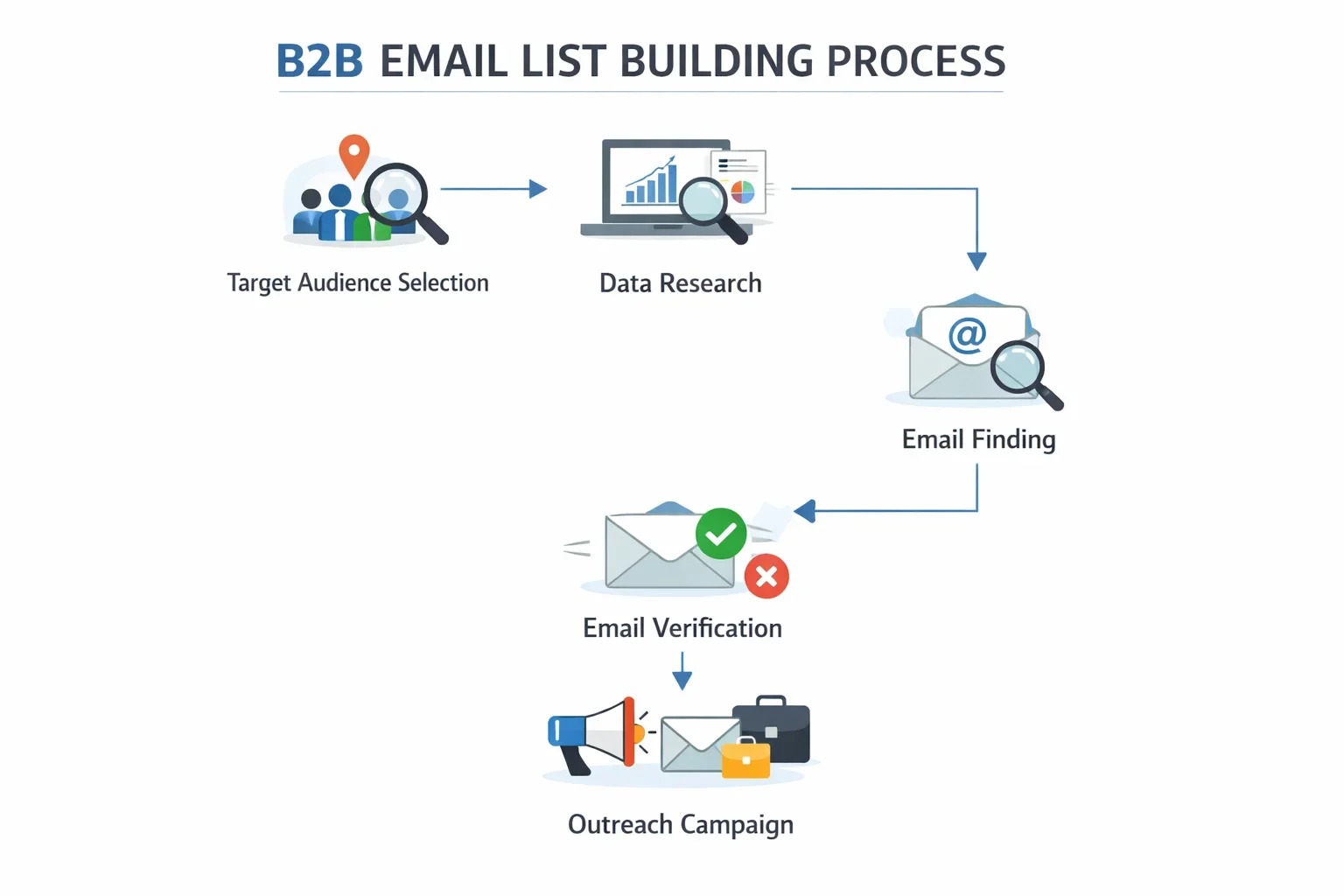
Step 4: Find Email Addresses
After identifying the right contacts, the next step is finding their email addresses.
You can do this using:
- Email finder tools
- Company email patterns
- Manual research
Example:
If a company uses the domain company.com, common formats include:
Using a mix of tools and logical guessing improves your success rate.
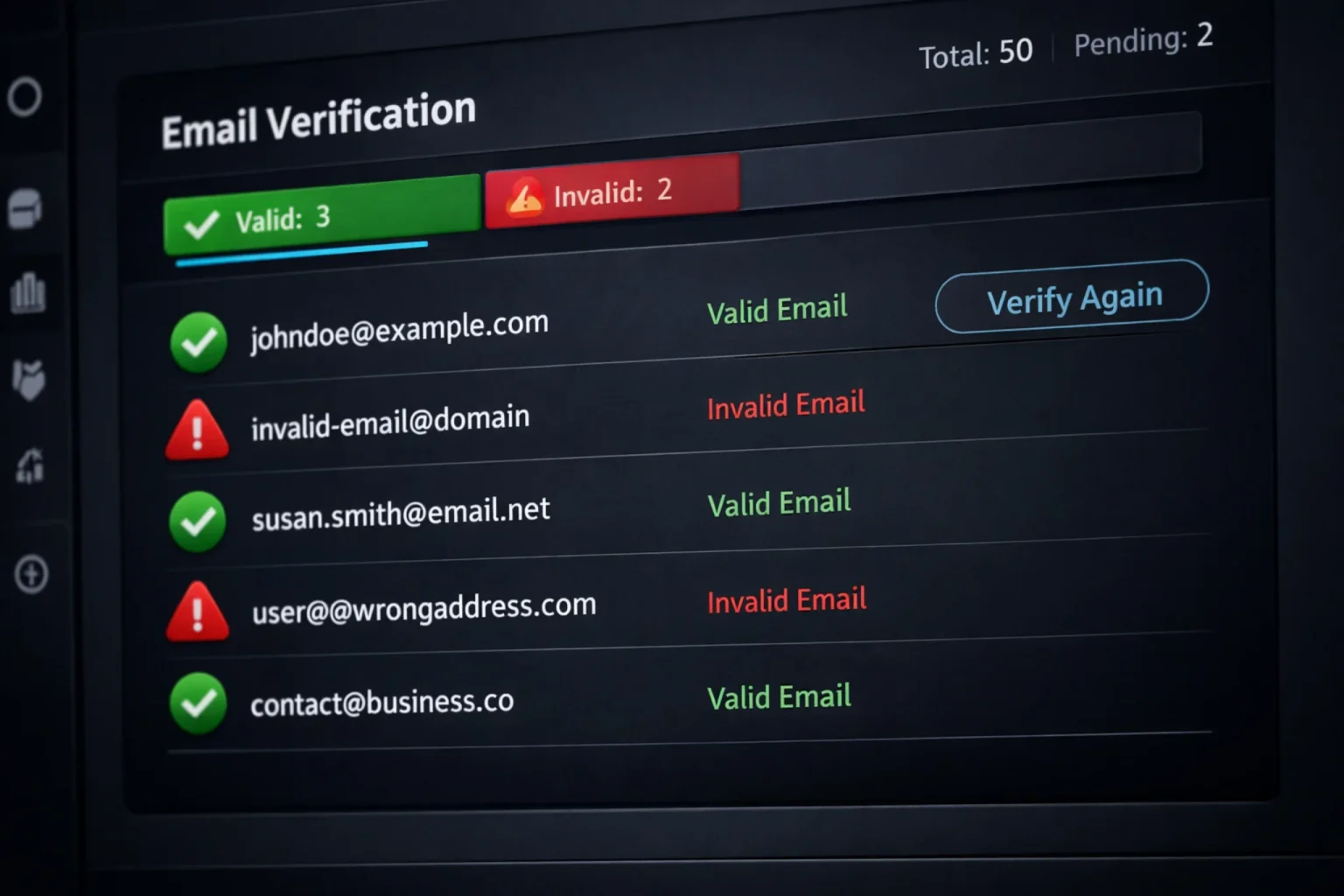
Step 5: Verify Every Email
This is one of the most important steps in the entire process.
If you skip verification, you risk:
- High bounce rates
- Poor email deliverability
- Damage to your sending domain
Use email verification tools to:
- Remove invalid emails
- Identify risky addresses
- Ensure better deliverability
Never send emails to an unverified list.
Step 6: Enrich Your Lead Data
A simple email list is not enough. Context is what makes your outreach effective.
Add useful data such as:
- Industry
- Company size
- Location
- Recent company activity
This allows you to personalize your messages and stand out in crowded inboxes.
Step 7: Segment Your List
Sending the same message to everyone reduces your chances of getting replies.
Instead, segment your list based on:
- Industry
- Role
- Specific pain points
Example:
- Segment 1: SaaS founders
- Segment 2: Marketing agencies
- Segment 3: Healthcare businesses
Better segmentation leads to better engagement and higher conversion rates.
Step 8: Avoid Buying Email Lists
Buying email lists may seem like a shortcut, but it creates more problems than results.
Common issues with purchased lists:
- Low accuracy
- Poor targeting
- High spam complaints
Building your own list ensures better quality and long-term success.
Step 9: Focus on Quality Over Quantity
A smaller, well-targeted list will always outperform a large, unqualified one.
Instead of chasing thousands of leads, focus on a few hundred high-quality prospects.
This approach leads to:
- Higher response rates
- Better conversations
- More conversions
Step 10: Turn Your List Into a Lead Generation System
Your list is only valuable if you use it properly.
To get results:
- Write personalized emails
- Follow up consistently
- Track performance
- Improve your messaging over time
A strong list combined with effective outreach creates a predictable pipeline of leads.
Common Mistakes to Avoid
Avoid these common errors:
- Collecting irrelevant contacts
- Skipping email verification
- Sending generic messages
- Buying low-quality data
- Ignoring segmentation
Fixing these alone can significantly improve your results.
Final Thoughts
Building a high-quality B2B email list takes effort, but it gives you a powerful advantage.
Instead of relying on unpredictable traffic, you create a direct connection with potential clients.
With the right process, your email list becomes more than just data. It becomes a reliable source of business growth.